Pathogens we are currently work on:
Phytophthora palmivora
P. palmivora is a destructive oomycete that infects many tropical and subtropical crops. Two major hosts are papaya, which produces nutritious fruit and papain used in the food-processing industries, and cacao, the source of cocoa for the global chocolate industry.
Phytophthora capsici
P. capsici is a highly aggressive oomycete that causes devastating diseases in a wide range of vegetable crops, including squash, watermelon, cucumber, and pepper. It can infect nearly all parts of the plant, leading to crown rot, fruit rot, and foliar blight. Its ability to survive in soil and water, reproduce rapidly, and adapt through genetic diversity makes P. capsici especially difficult to manage in warm, wet environments.

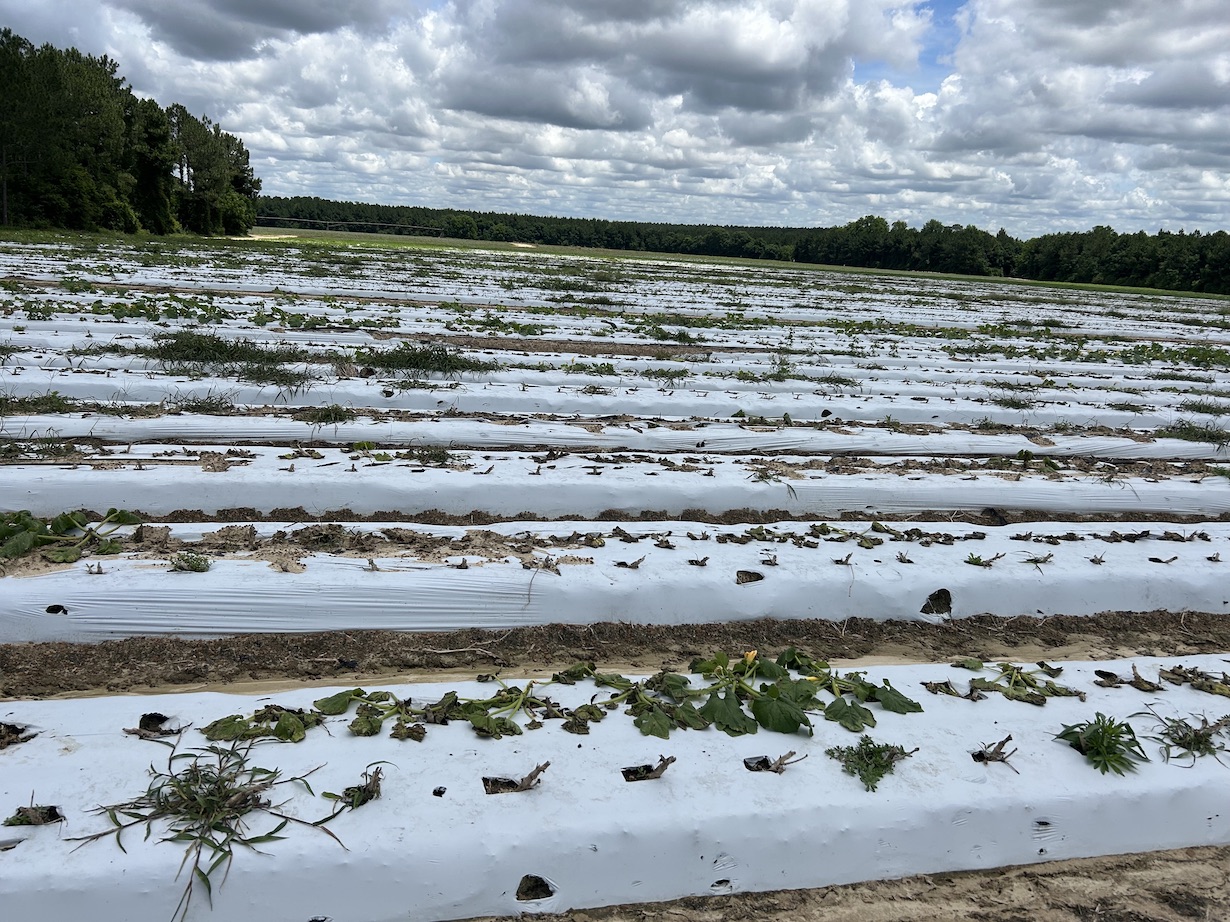
Fusarium oxysporum f. sp. niveum
Fusarium oxysporum f. sp. niveum (FON) is a soilborne fungal pathogen that causes Fusarium wilt in watermelon, a major crop in Georgia. Georgia ranks among the top watermelon-producing states in the U.S. FON infects plants through the roots and spreads through the vascular system, leading to wilting, stunting, and plant death. The pathogen can survive in the soil for many years as chlamydospores, making it difficult to manage. The emergence of multiple pathogenic races, including race 3, has posed a serious threat to watermelon production due to lack of disease-resistant varieties.
Major areas of research interests:
1. Functional genomics of the pathogens to identify key pathogenicity factors
Key pathogenicity factors and their host targets are potential targets to develop chemical and genetic control. My lab is interested in using functional genomics approaches to determine the roles of candidate effectors identified in the genomes using in silico tools.
CRISPR gene editing technology has enabled the functional genomics of oomycetes, which was almost impossible due to its diploidy (or polyploidy) and challenges in controlled sexual reproduction. For P. palmivora, my lab at University of Hawaii at Manoa developed a highly effective functional genomics toolkit, which includes an efficient Agrobacterium-mediated transformation system coupled to CRISPR/Cas9 gene editing. With this system, we successfully generated mutants of multiple effector genes, P. palmivora extracellular cystatin-like protease inhibitor PpalEPIC8, a secreted glycoprotein Ppal15kDa, an RxLR effectors which was identified as a key pathogenicity factor for cacao infection, and more. We applied the approaches and resources we developed for P. palmivora to P. capsici. We were able to successfully transform P. capsici via Agrobacterium-mediated transformation, and currently conducting genome editing of candidate effector genes. We also successfully transformed Fusarium oxysporum f. sp. niveum (FON) via AMT following similar protocol. We are using homologous recombination to knock out genes in FON.


2. Plant genome editing to generate disease resistance
Genome editing of plant genes involved in disease resistance/susceptibility has been shown to be a fast, effective way to breeding disease resistant, transgene-free crop varieties. The success of this approach requires: 1) efficient plant transformation and regeneration, tissue culture-based or tissue culture-free; 2) knowledge of genes with roles in resistance/susceptibility. Prior to my current position, my lab established approaches for transformation and genome editing of sweet basil and papaya. By editing of DMR6 homolog in sweet basil, we achieved enhanced resistance against basil downy mildew. Currently, we are working on transformation and genome editing of yellow squash and watermelon with a goal to generate disease resistance against P. capsici and FON for watermelon. In addition, we are developing approaches for rapid gene functional analysis to identify genes involved in resistance/susceptibility as candidate genes for genome editing via root transformation.
3. Identification and utilization of natural disease resistance
Wild species are well known to be great sources of disease resistance. We are interested in screening plant germplasm to identify new sources of disease resistance, followed by detailed characterization and utilization.